
Interesting Facts About The Sun
Interesting facts about the sun
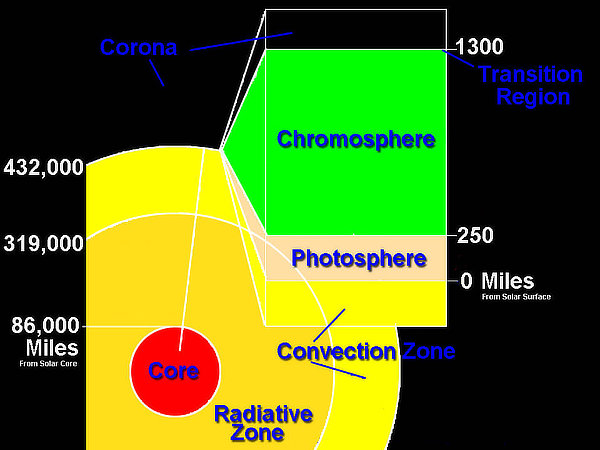
The sun has 3 inner layers
- Core
- Radiative Zone (innermost layer of nuclear fusion)
- Convective Zone (where the heat moves slowly from the inner layer to the surface)
Outer layers of the sun
- Photosphere
- Chromosphere
- Transition Region
- Corona
source (and more info about the sun’s layers)
A Big Ball of Gas
- The sun is a big ball of gas, 74 percent hydrogen and 24 percent helium.
- At the sun’s core, nuclear fusion burns about 600 million tons of hydrogen every second. The remaining four million tons of hydrogen are converted to energy, which makes the Sun shine.
Nuclear fusion is the source of Sun’s phenomenal energy output. The Hydrogen and Helium atoms that constitute Sun, combine in a heavy amount every second to generate a stable and a nearly inexhaustible source of energy.
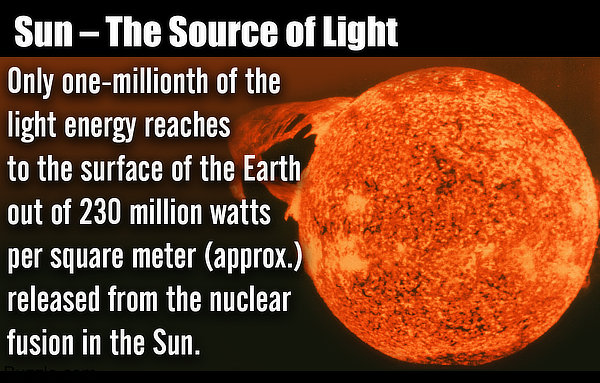
(source) and more info about nuclear fusion in the sun
The Energy From The Sun
- The total energy output from the sun is apparently 386 billion million megawatts.
- Every second the sun produces the same energy as about a trillion 1 megaton bombs.
- In one second, our sun produces enough energy for almost 500,000 years of the current needs of our so-called civilization.
- According to NOAA, 173,000 terawatts of solar energy strikes the Earth continuously. That’s more than 10,000 times the world’s total energy use.
- The amount of solar energy entering the top of Earth’s atmosphere is 1,360 watt per square meter.
- It takes 1 million years for the energy from the core to reach the surface of the sun.
Temperature Of The Sun
Temperatures vary between different layers.
- The temperature at the core of the sun is 27 million degrees F (15 million degrees C).
- The surface temperature of the sun is about 10 thousand degrees F (5,500 degrees C).

(source) and more info about the temperature of the sun’s layers
Rotation Of The Sun
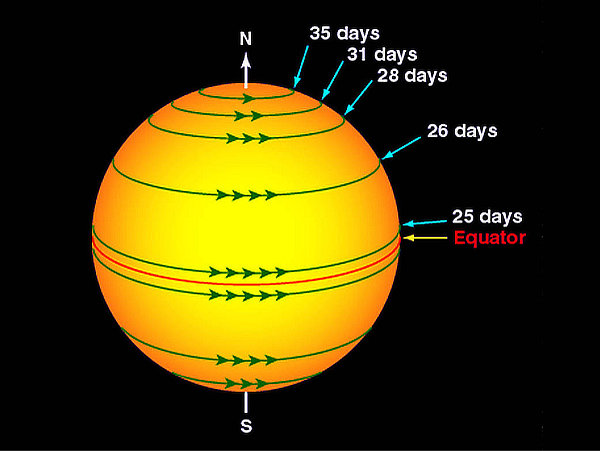
Since the Sun is a ball of gas/plasma, it does not have to rotate rigidly like the solid planets and moons do. The sun’s rotation varies by latitude.
- The sun rotates on its axis about every 27 days at the surface.
- It takes about 35 days for one rotation near the poles.
The Sun Is Pretty Big
Our sun is actually an average sized star. Some stars out there are 700 times bigger!
- The diameter of the sun is 864,000 miles wide (1.4 million km).
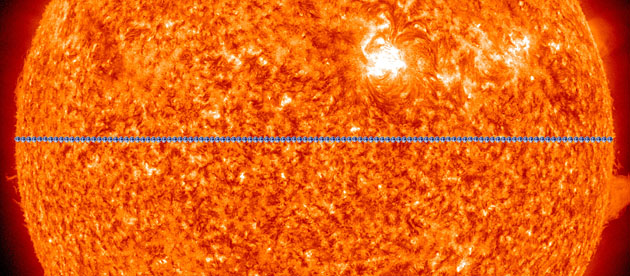
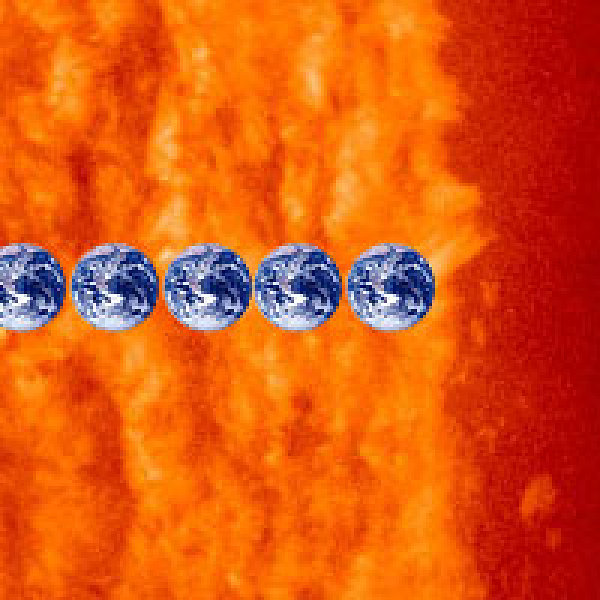
- About 110 Earths would fit across the width (diameter) of the sun.
- It would take about 1.3 million Earths to fit inside the sun (volume).
(see the image above illustrating how many earths fit across the sun’s diameter)
Solar Wind
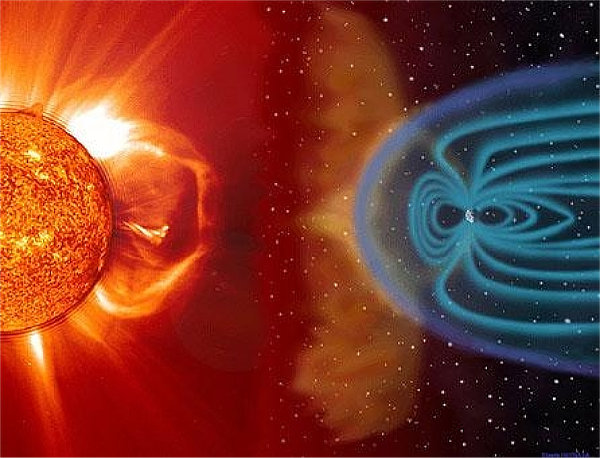
NASA explains, The solar wind is created by the outward expansion of plasma (a collection of charged particles) from the Sun. This plasma is continually heated to the point that the Sun’s gravity can’t hold it down. It then travels along the Sun’s magnetic field lines that extend radially outward.
- The average speed of solar wind as it is radiated from the Sun is 400 km/s. That’s 280 miles per second, or, just over 1 million miles per hour.
- Typically, it takes solar wind about 4 days to reach the Earth at that speed.
Light Speed
The light from the sun (like all light) travels 186,282 miles per second (299,791 km/s).
- The light from the sun takes about 8 and 1/3 minutes to reach the Earth, which is 93 million miles away (150 million km).
- When you look up at the sun, you’re seeing the sun as it was about 8 minutes ago.
Warp one, in the world of Trek, is equal to the speed of light.
The Best Of Warp Speed!
Solar Cycles
- Solar cycles occur every 11 years with an increase in sunspot activity.
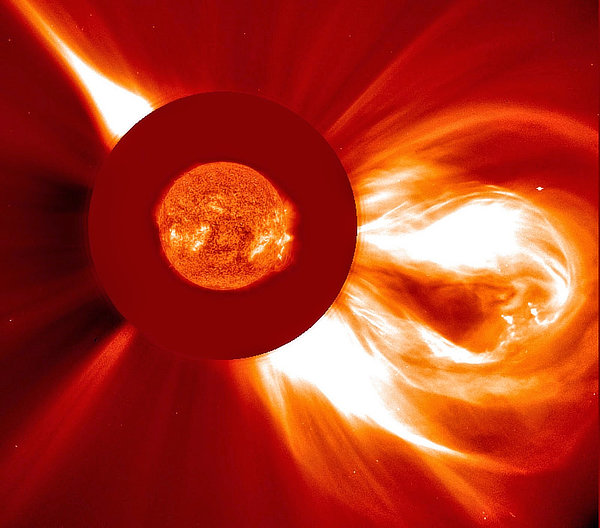
- A sunspot can sometimes erupt into solar flares that eject electromagnetic radiation particles into space, called a CME, or coronal mass ejection.
When Will The Sun Die
The sun is estimated to be 4.6 billion years old. And it’s apparently approximately 1/3 of the way through it’s ‘life’.
- The sun apparently has about 7 or 8 (some sources say about 10) billion years of fuel left. So don’t worry…
[ Read: Quebec Blackout 1989 – Power Grid Geomagnetic Storm Vulnerability ]
