
Signal Mirror for your Survival Kit
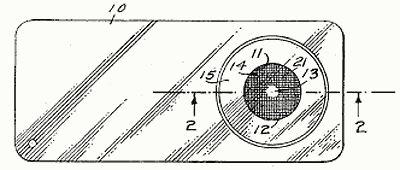
A ‘real’ signal mirror is a mirror with a built-in way to precisely aim it’s reflection (from the sun), and is intended to alert others of your location.
While an ordinary reflective mirror can also be used as a signaling device, it cannot be precisely aimed and ‘flashed’ at a target like a purpose-built signaling mirror.
The secret to a true signal mirror is this:
“Retro reflecting” material.
A reflective mesh which assists while aiming the mirror.
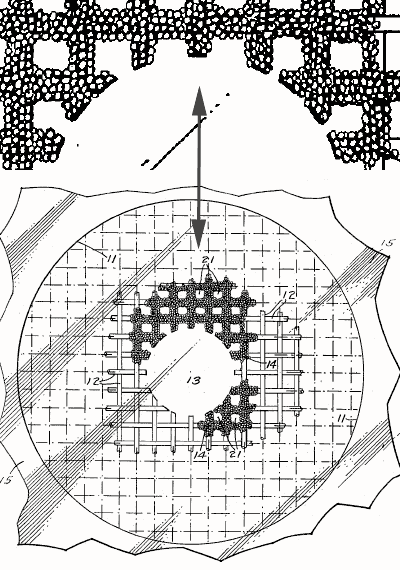
“Retro reflective”.
In the context of a signal mirror aiming device (with a round hole and ‘mesh’ in the middle), the mesh material actually consists of tiny glass beads glued to a screen.
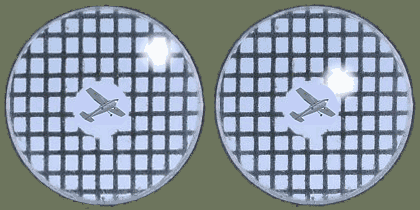
This feature creates a fireball on the mesh (an image of the sun), which is used to indicate where to point the mirror. You tilt the mirror to overlay the fireball on your target.
The original patent (# 2,557,108) for the signal mirror was issued in 1951 to inventor, Richard Hunter.
A few key notes from the Military Specification:
MIL-M-18371D(ASG), Mirrors, Emergency Signaling
– 2 different types of signal mirror, a 2×3″ and a 3×5″
– 2 layers of glass laminated together with a sighting device and lanyard
– Wide angle retro reflecting material for sighting
Signal Mirror Aiming Instructions
1. First, reflect sunlight from the mirror onto a nearby surface, hand, etc., so that you can identify where the bright spot is initially before you actually aim it.
2. Bring the signal mirror up to eye level while looking through the sighting hole. You will see a bright light spot on the mesh. This is the aim indicator.
3. Hold the mirror close to the eye and slowly turn and manipulate it so that the bright spot (fireball) is on the intended target.
It takes a little bit of practice, but you’ll figure it out…
Note: Signal mirror flashes may be seen for many miles, even in hazy weather.
Note: Never look directly at the sun, that includes through the aiming hole!
Not all Signal Mirrors are alike
Not every signal mirror is made from glass. In fact most are made with plastics and other reflective coated materials for lighter weight and cost.
The signal flash produced from a GLASS mirror is far brighter and more effective than a plastic signal mirror.
Here’s a glass signal mirror made in the USA, and a military approved and issued item.
It’s the same one that I keep in my kit:
Adventurer Series Military Grade Signaling Mirror

Once you get used to how it works, it becomes very obvious as to the advantage and usefulness of the reflective mesh material and the ‘fireball’ that is superimposed on the mesh when you’re aiming the mirror properly at the target.
Here are a few pictures which hopefully shows the effects.
Note: The mesh fireball appears much brighter in real life, compared with the photos.
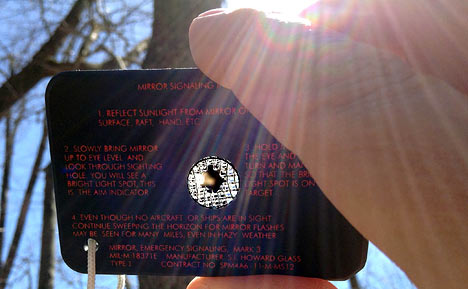
You can see some of the sun’s reflection on the tree through the center hole, while also seeing some of the fireball on the edge of the mesh.
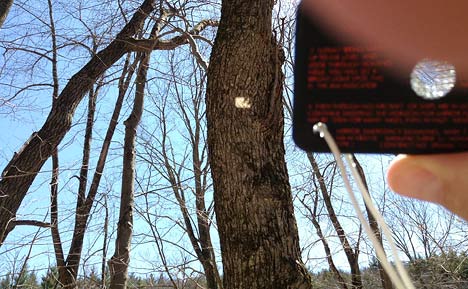
Having a signaling mirror of real glass will reflect a brighter flash than the plastic varieties.
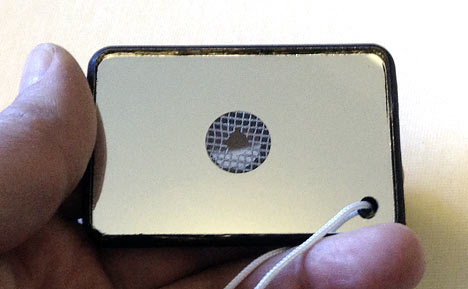
Signaling Mirror
