
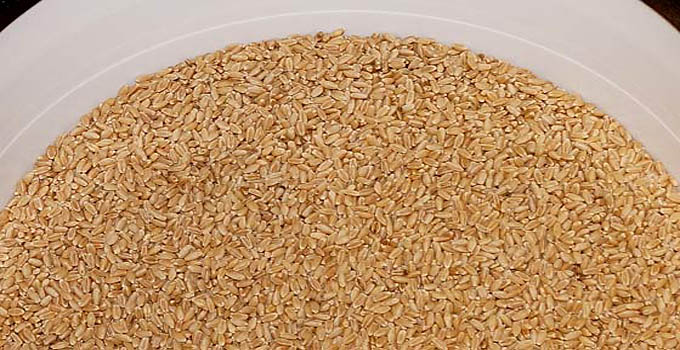
Benefits of Milling Your Own Flour From Wheat Berries
The benefits of milling your own flour:
1. Enables long term storage of wheat (decades).
2. Self reliance and homemade bread making skills.
3. Always able to make bread at home.
4. Health benefits.
5. Frugality.
Long Term Storage of Wheat Berries
One very good reason why you should be milling your own flour is to advantage long term storage of wheat! More specifically, wheat berries. A properly sealed and stored bucket of wheat berries will last for decades!
Wheat berries will not begin to lose nutrients until you actually mill it to make flour, making it a great choice for storage.
Survival Calories
There are lots of calories in a 5 gallon bucket of wheat, making it an excellent part of your food storage diversification plan.
Depending on where you source caloric weights & measures, the following figures are pretty close:
630 calories in one cup of hard red wheat berries.
75 cups of wheat berries in one 5-gallon bucket.
47,000 calories in one 5-gallon bucket of wheat berries.
There are quite a few “survival days” in a bucket of wheat…
[ Read: Calories Per Pound Of Rice, Beans, Wheat ]
[ Read: The Calories in a 5-Gallon Bucket of Rice, Beans, and Wheat ]
Self Reliance & Homemade Bread
Do you know how to make homemade bread? It’s really quite easy.
Just from a preparedness standpoint, knowing how to make your own homemade bread is a good basic kitchen skill. Unfortunately the vast majority of people only know which aisle in the grocery store to buy their bread.
There are a bazillion recipes for homemade bread. You might simply use only very basic ingredients or you might add more to make it interesting. That’s the fun of it…
[ Read: Whole Wheat Bread Recipe ]
Bread Baking For Beginners
(view on amzn)
Health Benefits of Milling Your Own Flour
How many foods do we consume that include unpronounceable ingredients? Ever wonder how some foods can sit on grocery store shelves for so long without seemingly ‘going bad’? Wonder what’s in that stuff…!
When you control the ingredients that go into your own foods (homemade bread), you control the health attributes.
Consuming wheat bread and other foods from whole wheat is apparently healthier than eating foods from processed-bleached flours.
Even if you buy whole grain flour at the grocery store (already milled), you have little idea how long it has been sitting there on the shelf or how long it has been since it was milled. Milling your own flour will remove any doubts about the freshness and nutritional benefits you will be receiving.
Fresh milled flour contains the most nutrients. When you mill only what you need, you’re always consuming peak freshness.
Frugality
After the initial outlay for a flour mill, you may find that it costs less to make your own bread than buying store bought bread after awhile.
For the sake of an example, lets say that a 50 pound bag of wheat berries cost $50. A typical homemade loaf of bread will then cost about $1.30 of wheat. Add a few other ingredients – but you’re still looking at less expensive bread compared with most brand name store breads.
Weights and Measures
A typical 5-gallon bucket will hold 33 pounds (528 oz) of wheat berries after subtracting the weight of the bucket.
Wheat berries weigh about 7 ounces per cup.
My bread loaves require about 3 cups of wheat berries for milling. That’s 1.3 pounds (21 oz).
Each 33 pound bucket of wheat berries will make about 25 loaves of bread.
Which Flour Mill To Buy?
We have both an electric flour mill and a hand flour mill. Obviously milling your flour by hand takes a lot longer! However for the sake of higher level preparedness it’s a good idea to have one!
Here’s an article:
[ Read: Choosing a Hand Grain Mill (Flour Mill) That’s Best For You ]
WonderMill Electric Flour Mill
(view on amzn)
A popular yet inexpensive hand flour mill:
The Grain Mill
(view on amzn)
And, one of the best (though expensive!):
Country Living Mill
(view on amzn)
