
Starvation During Great Depression: Lessons for Modern America

The Great Depression, which gripped the United States from 1929 into the late 1930s, drastically altered the fabric of American society. By the end of 1932, approximately 60 million Americans – about half the population at the time – were affected by economic hardship, hunger, and uncertainty.
The scope of human suffering was enormous: urban breadlines stretched for blocks, soup kitchens served tens of thousands daily, and homelessness soared with more than 50,000 people living on the streets of New York City alone at the Depression’s height.
Starvation and Food Insecurity: Numbers and Realities
While outright death from starvation was less common than in some other calamities, it was not absent. Numbers and underreporting was rampant, especially in rural and marginalized communities with little documentation.
Most fatalities related to chronic hunger were due to secondary causes brought on by sustained malnutrition – such as weakened immune systems and disease – rather than explicit records of “starvation.”
Yet, millions more suffered from “food insecurity” and malnutrition. Children scavenged for spoiled produce at docks or begged for scraps, and malnutrition stunted growth and development for a generation.
Poverty and lack of access to affordable, nutritious food were the primary drivers of this widespread hunger.
Could It Happen Again? Vulnerabilities Today
While the United States today enjoys a far higher standard of living, the triggers of a similar crisis remain. Modern causes of mass food insecurity include:
- Major economic downturns – mass unemployment and collapsed consumer demand, as seen in the Depression.
- Supply chain failures from natural disasters or geopolitical tensions, like pandemics, wars, or international embargoes.
- Drastic inflation or stagflation, making food unaffordable for vulnerable populations.
- Persistent poverty, systemic inequality, and lack of adequate social safety nets.
In fact, I found statistics from 2020 indicating that more than 13.8 million U.S. households struggled with having enough food at some point in the year, while today it’s worse with 38.3million Americans who cannot always afford enough food.
Imagine how the numbers would worsen after a trigger event. We are already on an upward trajectory of increasing insecurity. Hunger is a terrible thing. Try not to let that be you…
Why Preparation Is Sensible
History shows that societies can quickly shift from relative prosperity to widespread hardship.
With economic, environmental, and geopolitical uncertainties, it is practical to build some degree of preparedness, such as:
- Establishing emergency food reserves at home for temporary disruptions.
- Discovering/supporting local agriculture and community food programs.
- Heightened awareness of the potential trigger mechanisms.
Ultimately, the lessons of the Great Depression remind us that food insecurity is not merely a problem of the past, but an ever-present risk dependent on wide-ranging social, economic, and environmental factors. Being mindful and proactive helps cushion against the unpredictable tides of history.
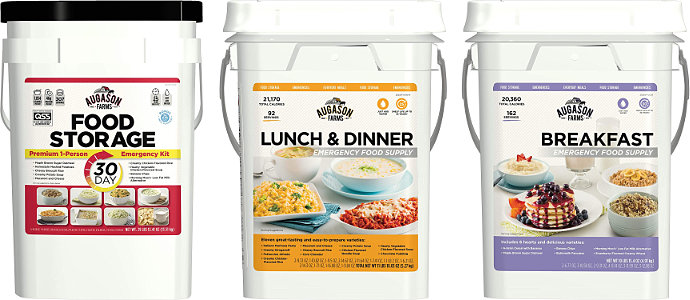
Augason Farms 30 Day
Lunch & Dinner
Breakfast
As an Amazon Associate I earn from qualifying purchases. There is no extra cost to you.
I just got back from a trip that took me through Illinois and Wisconsin and along my route were thousands of acres of corn, soybeans and green beans. Today’s modern tractors and combines are heavily dependent on computers to operate and if an EMP or solar storm fried their circuitry, these crops would rot in the fields as it would be impossible to gather them by hand and good luck finding someone to do it.
I wonder how many farmers have saved old EMP proof equipment as a backup for just in case and is it in operational condition. I have a 2023 Kubota that is a great tractor however it is computer dependent so I have a 1968 Ford 5000 that is an old but reliable backup.
You brought up great points regarding the modern tractor. I wonder about those giant agricultural tractors and where the supply chain dependencies are located or hinged upon – to keep them running – if they break down. US based? (probably not).
I have an old Ford 1920 tractor from the early 90’s. Ironically (given the discussion surrounding hi-tech in tractors whereas this one is low-tech) the other day it broke down while brush hogging. Sputtering and surging. I believe it’s fuel related – possibly the diesel fuel filter, or maybe a clog in the old fuel tank where the fuel exits into the line/shut-off valve (maybe gunk build up in the tank – which would not be fun to deal with). Anyway, at least there are no computers on board. Got the fuel filter and will replace it soon. Point being – it’s easier to fix an old tractor than a new one I suppose.
I too recently went on a road trip (Mrs. J and I) from New Hampshire to Utah (Zion) and back. There sure is a lot of corn and soybeans grown along the way – at least until you get into the desert type of climate! (apparently 1/3 the corn goes into gasoline production). Like you said, it all depends on high-tech equipment to implement and harvest…
Some recent comments were lost from this article because I had to restore my website database.
Here’s one from “TelStar”…
If we were to have a CME or EMP event take out our microcomputer, yes, I see people converting equipment back to manual controlled models. I believe a lot of equipment makers have hardened whatever computing elements they have. But the basics of IC engines will still be there, and enterprising mechanics will come up with a patch to make them work. In such an event, I see Preppers becoming leaders in the community. People will see that we, preppers have adapted and are living well, and want to do the same. Just my 2 cents worth of brain output, lol.
Some recent comments were lost from this article because I had to restore my website database.
Here’s one from “Minerjim”…
I’m moving towards all diesel equipment myself. I can run it on canola oil if need be, no real ignition system like gasoline.
Some recent comments were lost from this article because I had to restore my website database.
Here’s one from “St Michael”…
Good conversation on modern tractors. They are fantastic when they work. We have computer enhancements on work equipment that periodically shut down the machines. I also have a 22 Kubota. Works great so far. My son down the street bought a 1948 tractor. Does have electric start but also hand crank back up. Starts on the coldest days too. He is also looking to modernize but is keeping the old Farmall.
No one seems to be talking about what is happening (real time) concerning the frequency of earthquakes, volcanos, droughts, famines, slowing of the AMOC, pole drift, etc.. The pace is quickening. Dig into the real science, observations, and earth’s history to realize we are in the midst of a pole shift which may culminate by about 2040 ish. Many severe events will happen as this event builds. A “near” extinction level event especially for those that don’t prep.. To scary to embrace I guess.