
Best Washboard For Laundry And How To Use It
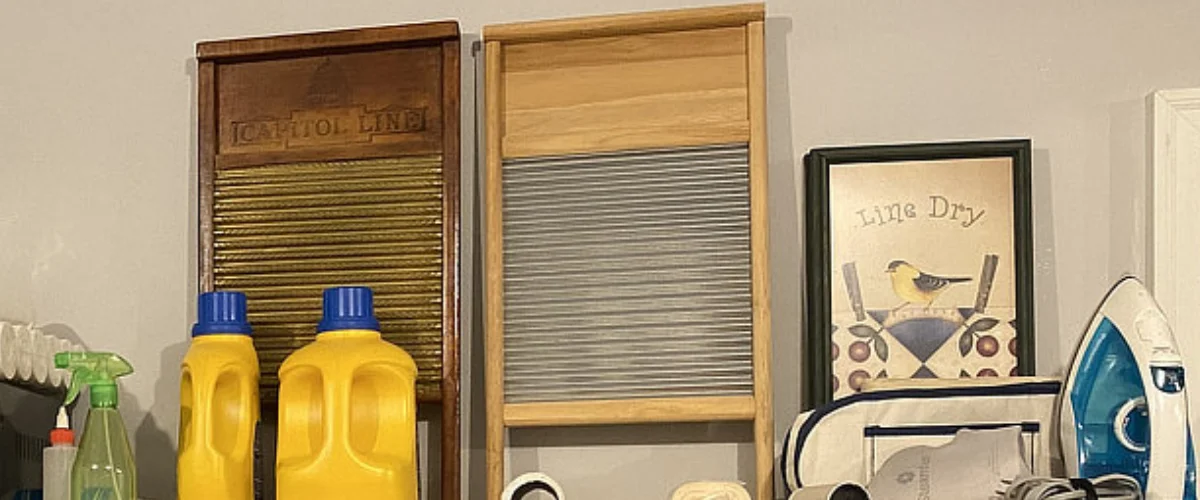
A few years ago, I was searching for the best washboard for laundry. It’s a simple device for washing clothes by hand. It’s typically made with a wooden frame with an attached metal galvanized scrub board.
The washboard’s ‘scrub board’ is lined with ridges (also known as ruffles or ribs). The ridges help loosen the dirt as clothes are washed and rubbed against them.
It’s what our ancestors used before the advent of the washing machine. Don’t get me wrong, we love our modern front-loading washing machine! However, a good old-fashioned washboard will always get the job done (without electricity), albeit by hand…
Best Washboard for Laundry
This washboard is very sturdily built. The ribs of the board are just deep enough…not so deeply ribbed that even the ‘finest of fabrics’ can be cleaned of spots and stains.
I did some research, and this is the one I bought years ago. I am still happy with it. Maybe the best washboard for laundry? I believe it is among the best and has consistently received excellent ratings and reviews, even to this day.
As an Amazon Associate I earn from qualifying purchases. There is no extra cost to you.
→ MAID-RITE
(The Columbus Washboard Company)

About the MAID-RITE Washboard
The MAID-RITE washboard manufacturer is The Columbus Washboard Company. They were founded in Columbus, Ohio, in 1895, and are now headquartered and manufactured in Logan, Ohio.
The washboard is handmade using locally sourced materials. The classic family size, approximately 12½” × 23¾”, with a rub surface around 10¾” × 11″.
Heritage: Starting from humble backyard beginnings, the company ramped up production over decades—especially notable between 1926 and 1955, selling over 15 million washboards.
Surviving the market: By the 1970s, Columbus Washboard Company stood as the last remaining washboard manufacturer in the U.S.
Why Get a Washboard?
Washboards provide a simple, electricity-free way to clean clothes, making them ideal for camping, off-grid living, emergencies, or travel when a machine is unavailable.
A well-made washboard, especially one with a sturdy hardwood frame and stainless steel or galvanized surfaces, can last for decades with proper care and storage.
Think about the “what if”. What if we had to get by for some time without the conveniences of modern appliances (due to an electric power grid outage)? Think about your washing machine, for example. Yes, I know, washing your clothes will not be one of your immediate high concerns if and when the grid goes down for an extended time. But, eventually, you have to wash clothes, right? Among the many tasks you’ll face will be keeping clean, including your clothes. How will you do it?
Or perhaps you’re a homesteader who wants to give it a try. Or simply to have a washboard for the sake of general prepping and preparedness, just in case.
How to Use a Washboard
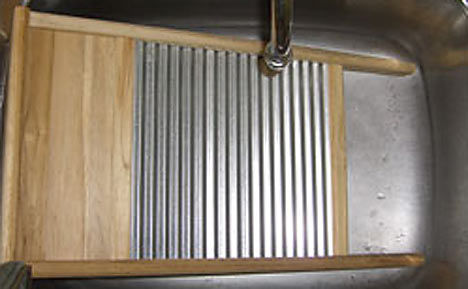
A good old-fashioned washboard. A little bit of ‘elbow grease’ will take out the ground-in dirt (you’re scrubbing will be directly proportional to the dirt involved)!
Many parts of the world still use washboards for washing clothes.
Clothes are soaked in hot soapy water in a washtub, bathtub, or sink. You might go to a ‘Tractor Supply’ store and get yourself a nice-sized washtub. That’s what I did.
Then they’re squeezed and rubbed against the ridged surface of the washboard to force the wash liquid through the cloth, carrying away dirt.
A bit of scrubbing, combined with a soap bar of Zote or Fels Naptha, will get the job done (see below).
Washboards can be used in a sink or bucket, or can also be used for washing in a river or any body of water, with or without soap.
Step-by-step instructions:
Prepare the water. Fill the wash tub with water at the appropriate temperature: hot for sturdy whites/cottons, warm for mixed loads, and cold for bright colors and delicates. Add soap and swirl to dissolve, creating a soapy bath.
Soak (optional). For heavily soiled items, soak 10–30 minutes to loosen dirt.
Position the garment on the board. Hold the garment taut over the board with one hand; use the other hand to press the fabric against the corrugated surface. Work one small area at a time.
Scrub with controlled strokes. Use short up-and-down or gentle back-and-forth motions — don’t twist or yank. Apply firm but even pressure. Spend 30 seconds to 2 minutes on soiled areas; avoid over-scrubbing, as this can thin or stretch the fabric.
Rinse thoroughly. Move the item to the rinse bucket or hold it under running water until the soap is gone and the water runs clear.
Remove excess water. For sturdier items, gently wring them, or better yet, roll the garment in a towel and press to absorb the water. For delicates: press flat to gently squeeze out water (avoid wringing).
Dry and reshape. Hang on a line or lay flat to dry, reshaping while damp to maintain fit. Close fasteners and smooth seams to reduce wrinkles.
Helpful tips & troubleshooting
- Use two buckets (one for washing and one for rinsing) to conserve water and avoid re-soiling rinsed items.
- For very delicate items, skip the board or use a soft pad between fabric and board.
- If a fabric stretches, you likely scrubbed too hard — be gentler next time.
- A small bar of soap held against the board while scrubbing can create a steady lather for spot cleaning.
Washboard Soap
Both ‘Fels Naptha’ and Zote have been popular laundry soaps for many years. When I bought my washboard, I also picked up a case of Fels Naptha soap.
→ ZOTE Laundry Soap Bars(affiliate)
When considering your prep items and what you may need in a worst-case scenario (extended grid-down), don’t forget to plan for how you will wash your clothes. Get the best washboard for your laundry needs!
Thanks so much for your detailed info !! I have been preparing since 2023 for the financial and political crisis we are now about to face. I live alone in a small camper at a Florida state park. I have free rent and I volunteer in the park. God has brought me to this part of Florida and I have been living rent free since June 2025. I do not know where I will live Nov 1st, as my contract will end at that time. What I do know is that God will provide for me.
We routinely use ours (inherited from northern Plains pioneer grandparents) for overalls used during gardening and in the garage and they are invaluable. Our new (useless) modern washer is computerized, uses minimum water to clean clothes and does a lousy job, so we prewash the old-fashioned way. Our neighbors commented on seeing these lovely “decorative” antique washboards in our laundry room! We are currently restoring a 50+ year old washer / dryer set so we can actually have a washer that works properly.