
How to Know your Freezer Lost Power and Thawed While You Were Away
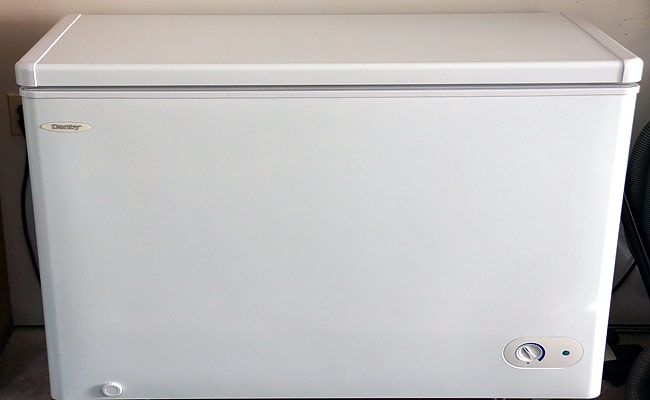
If your home loses power while you are away, it will probably come back on after awhile.
You may be away on vacation, a trip, or an evacuation from a hurricane (for example).
Though you may have a clue that the home lost power when you see all your digital clocks flashing (the one on the microwave, the stove, etc,) you won’t know for how long.
The food in your freezer or refrigerator might have reached room temperature (maybe for a long time!). And that will most certainly risk bacterial growth and foodborne illness.
There are a few simple ways how to know if your freezer thawed.
Freezer Temperature Alarm
It’s not an alarm exactly, but it will let you know if the freezer thawed.
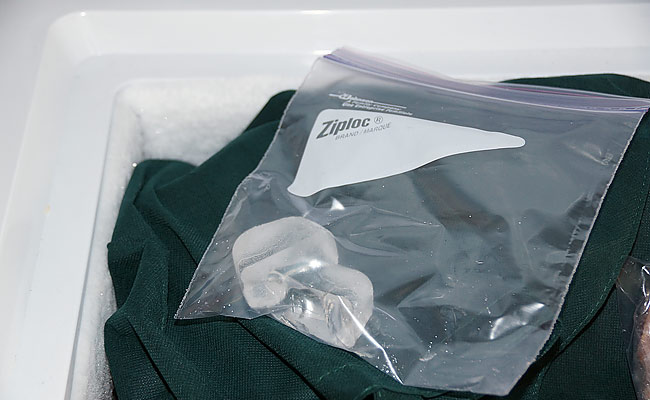
Take an ice cube or two and place in a sealed plastic bag or a see-through sealed container. Put it in the freezer.
Note: It is important for the bag (Ziploc) or container to be sealed so that the cube or cubes don’t evaporate.
If the freezer thawed, the ice cube (or cubes) would partially or completely melt from their original shape. The result would either be a badly misshapen cube or a melted and re-frozen puddle on the bottom.
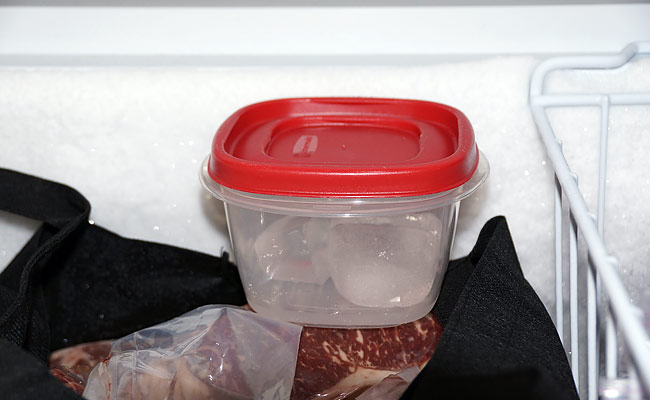
You might also simply put the cubes in a small Rubbermaid container.
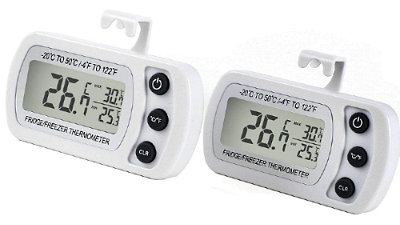
I like the following set of refrigerator / freezer digital thermometers with max/min temperature indicators. It’s a great way to know if your freezer thawed while you were away (just read the ‘max’ temperature),
Digital Freezer / Refrigerator Thermometer
Another method that I read about is this:
Freeze a cup of water. Place a coin on top. If the water remains frozen, the coin will stay on top of the ice. If it melts, then the coin will begin to sink into the cup.
What To Do With Your Chest Freezer When The Power Goes Out
1. Don’t open the freezer!
2. Cover the freezer (drape it) with several blankets (the more the better) which will help insulate it further. Be sure not to cover the motor vent or vents, so when the power comes back on they will not be obstructed.
TIPS:
The more full your freezer, the longer it will all stay frozen when the power goes out.
Food in a full freezer will stay frozen for about 48 hours without electricity.
Food in a half-full freezer may remain frozen only 24 hours.
A generator will keep it frozen, even if you run it for an hour, then off for a few, repeat…
If freezer food has partially thawed, or is still below 40 degrees F, it is safe to re-freeze.
When in doubt, throw it out.
If you are home when the power goes out, if it extends into day #2 and there’s doubt whether it will come back on in the next 24 hours or so,
– start eating your frozen food!
– consider home canning what you can (if you have a gas stovetop since the power is out)
– give some away, have a neighborhood block party?
Continue reading: Freezer Food Storage Shelf Life
Leave a little room above the food in a chest freezer – put a cut-to-fit 2-inch thick sheet of polyisocyanurate insulation (R value of 6.5 per inch) on top of the food. The weakest insulation point in a chest freezer is the lid, this adds more insulation where it’s weakest. A small gap – 1/4″-3/8″ – around the edges makes it easier to place and remove and doesn’t compromise the additional insulation value very much. Duct tape over the exposed poly around the perimeter of the cut-to-fit board will protect the foam and prevent “shedding” of foam particles (FYI, duct tape is available in 4″ wide rolls).
Do NOT put more insulation on the inside walls – that’s where the cooling coils are which make the freezer “a freezer.” More on the outside is fine, but make sure you’re not blocking any air circulation to the compressor area or insulation over heat exchanger side – some freezers use the exterior metal shell as a radiator to get rid of compressor heat – feel the sides, if they’re warm that’s compressor heat, do not cover those panels. If your freezer does NOT use the exterior metal shell to dump compressor heat, having some pre-fitted “outside sheets” of polyisocyanurate insulation can keep food colder longer during power outages.